


FLOATING CITY
Growth and Expansion of MIT Infinite Corridor
FLOATING CITY
Growth and Expansion of MIT Infinite Corridor
The Infinite Corridor
Underlying the lore of MIT and the city of Cambridge’s academic/professional think-tank profile is the Infinite Corridor, a subsurface umbilical cord connecting many of MIT’s core buildings, as well as the legacy of the now demolished Building 20, the “temporary” structure erected in 1943 and demolished in 1998, that was home to numerous Nobel Prize winners’ discoveries during its half century existence.
Kendall Square
Located adjacent to the MIT Media Lab, the Kendall square of Cambridge covers a huge triangle zone of three blocks. The current master plan of this district divides buildings by use and lot. This MIT special district occupies a finite footprint but has unparalleled views of the city and river, . Currently a collection of surface parking lots, this recently rezoned area has the potential to become a city within the city, a campus within the campus, and an extension of the university itself.
Floating City
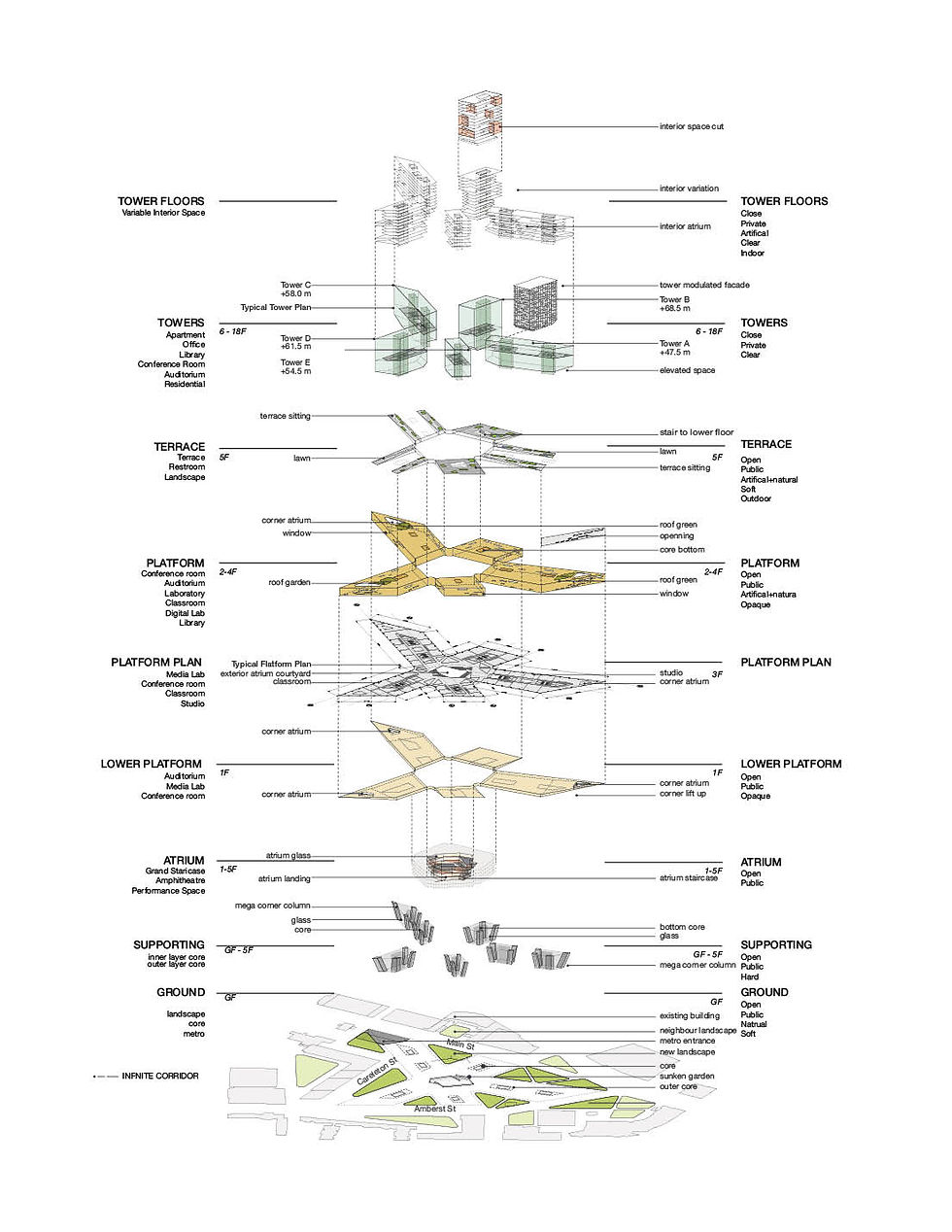
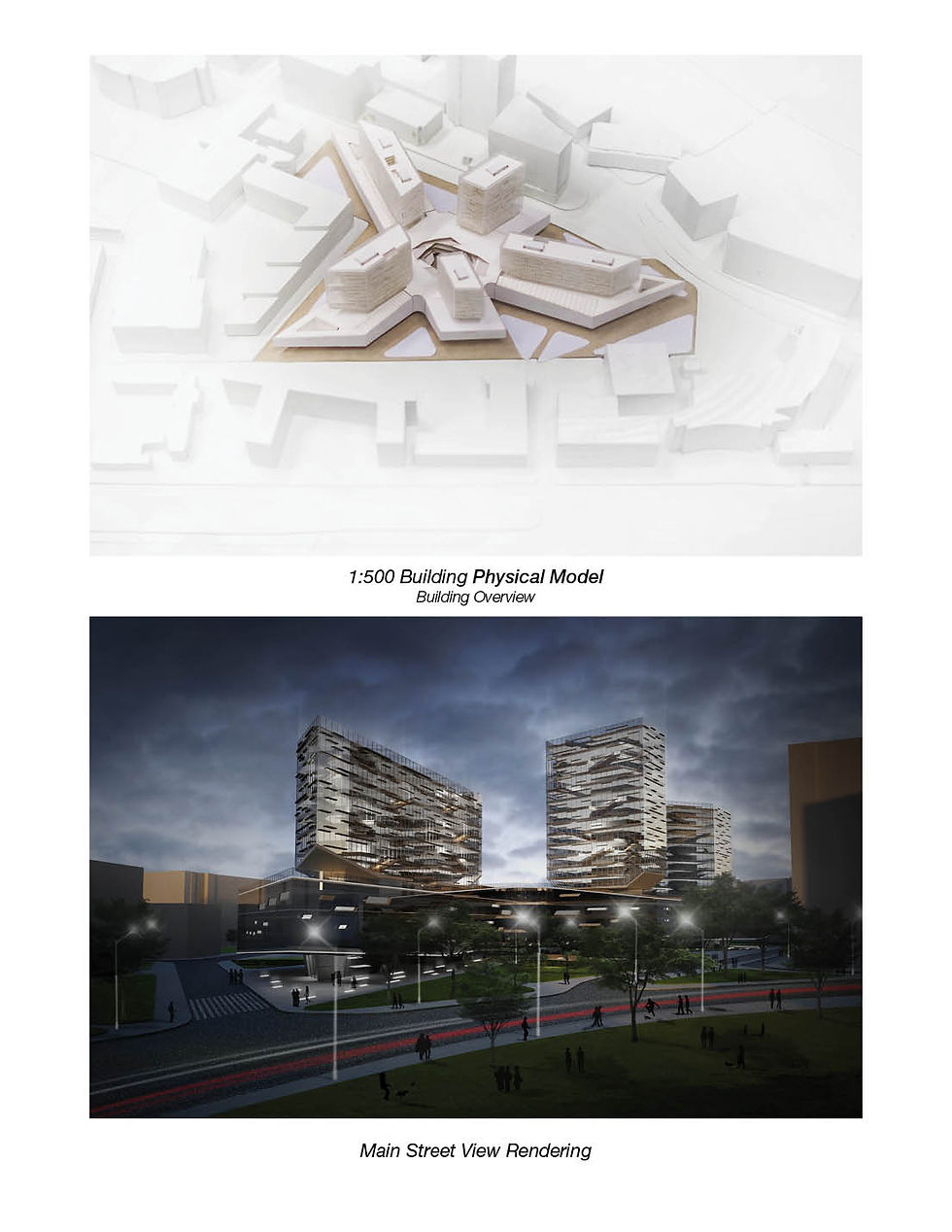
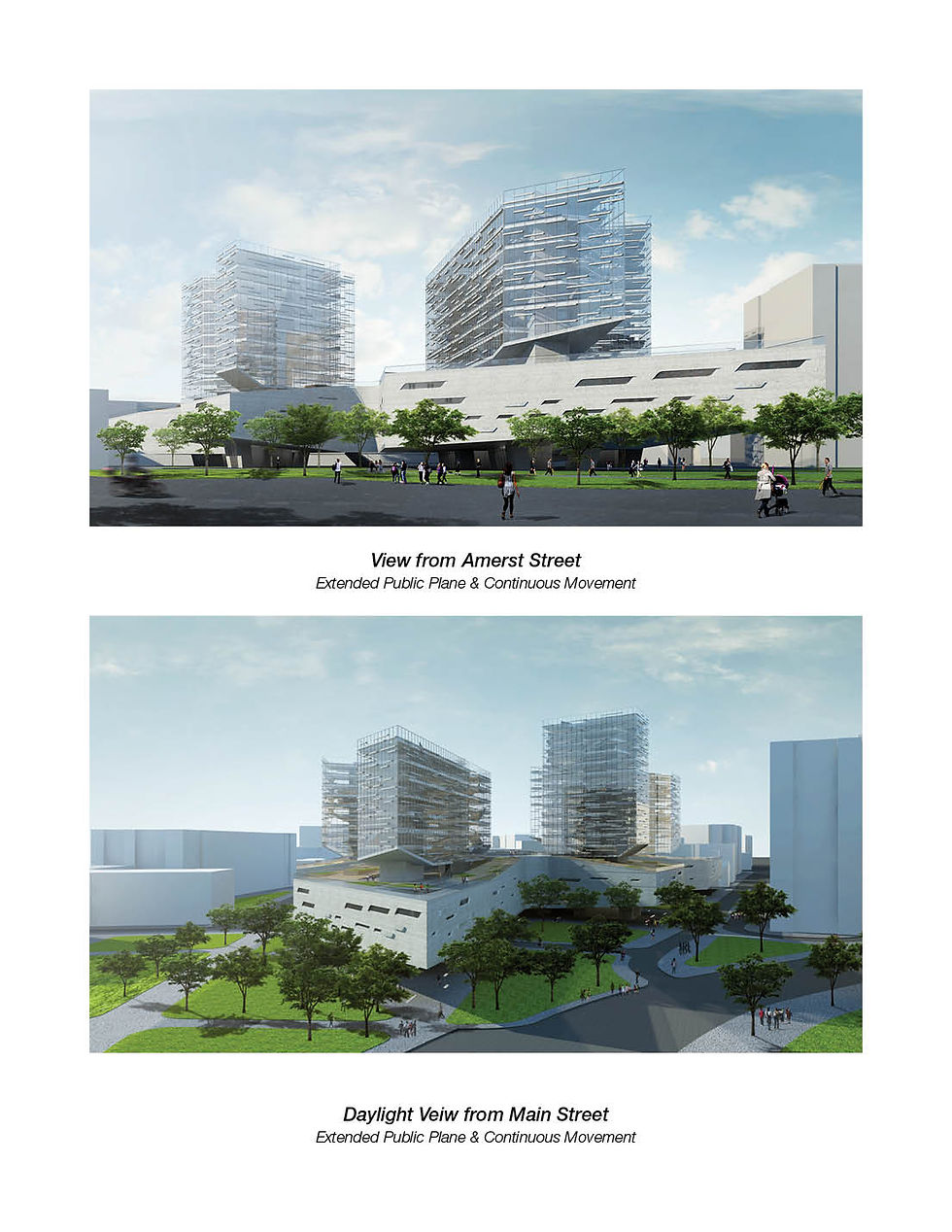
Our proposal is based on the relationships between the surrounding buildings and the adjacent public square and green spaces. Consequently, instead of segmenting the urban-scale site into fragmental pieces, a mega-structure floating building has been proposed to keep the urban context, meanwhile it operates as a networked linking connection. The project rebuilds the architectural typologies and ideological sense of campus by recasting the connections between the Micro-Urban and Cityscape.





Date: 2014
Design: Ma Ning, Chuanzhang Li
Programs: Office/ Retail/ Apartments
Location: MIT, United States
Type: Design Studio Works
Professor: Marion Weiss & Michael Manfredi